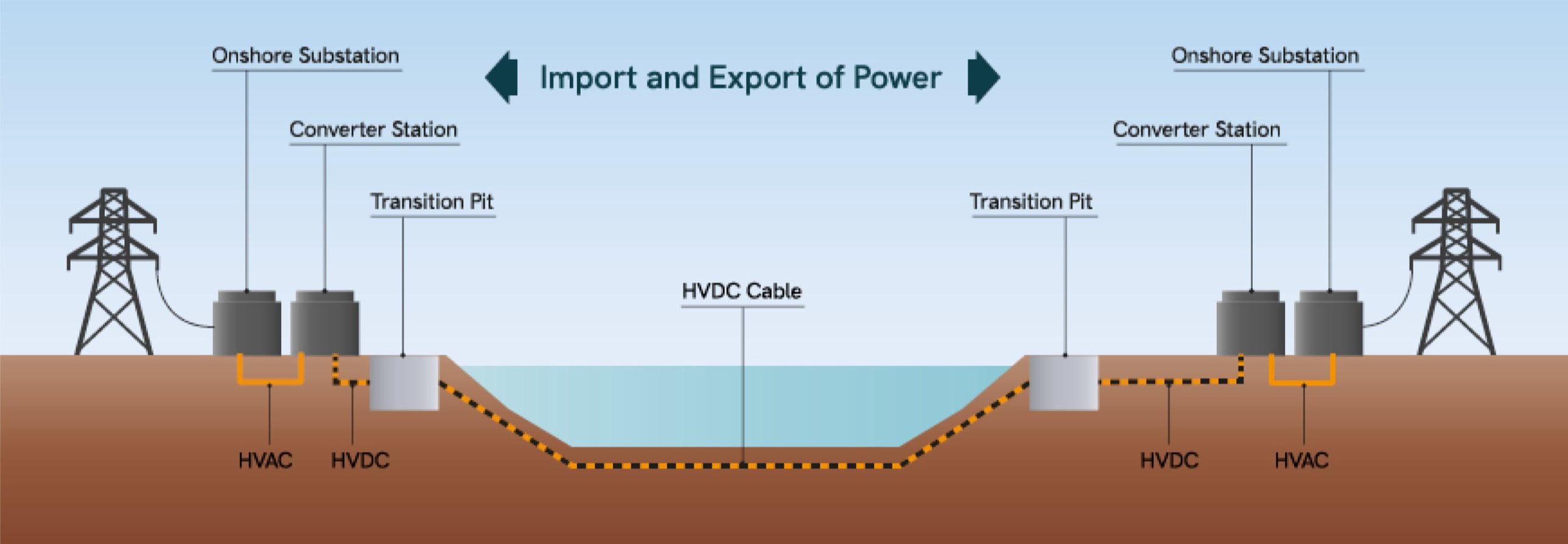
LirIC follows a carefully chosen path connecting two established grid locations with a largely subsea route through the Irish Sea.
In Northern Ireland, LirIC connects to the 275 kV grid at Kilroot substation near Carrickfergus (operated by NIEN). A short onshore cable (around 1 km) runs from the landfall to the Kilroot converter station, which sits adjacent to Kilroot Power Station.
Two HVDC cables, operating at ±320 kV, cross the Irish Sea between landfall points near Hunterston and Kilroot. The cables are buried into the seabed for protection, using rock placement or concrete mattressing where burial alone isn't sufficient.
LirIC connects to the 400 kV transmission network at Hunterston East substation (operated by Scottish Power Transmission). A short underground cable (around 0.5 km) links the substation to the LirIC converter station, which sits close to Hunterston Nuclear Power Station on the Ayrshire coast.
| Component | Location | What it does |
|---|---|---|
| HVAC Switchgear Bay | Hunterston (GB) | New 400 kV bay at SPT's Hunterston East substation — the GB grid connection point. |
| HVAC Underground Cable | Hunterston (GB) | 400 kV AC cable (~0.5 km) connecting Hunterston substation to the LirIC converter station. |
| Converter Station | Hunterston (GB) | 700 MW station converting 400 kV AC to ±320 kV DC for transmission across the Irish Sea. |
| HVDC Land Cable | Hunterston to landfall | Two 320 kV HVDC cable (~0.5 km) from converter station to the GB shoreline. |
| HVDC Submarine Cable | Irish Sea | Two 320 kV HVDC cables (~140 km) crossing the Irish Sea between Hunterston and Kilroot. |
| HVDC Land Cable | Kilroot to landfall | 320 kV HVDC cable (~1 km) from the NI shoreline to the Kilroot converter station. |
| Converter Station | Kilroot (NI) | 700 MW station converting ±320 kV DC back to 275 kV AC for delivery to the NI grid. |
| HVAC Connection & Switchgear | Kilroot (NI) | 275 kV cable termination and switchgear connecting to Kilroot substation (delivered jointly with NIEN). |
At each end of LirIC, a converter station transforms electricity between AC and DC, making efficient long-distance transmission possible.
Located adjacent to Kilroot Power Station near Carrickfergus. The ~2.75-hectare compound houses identical converter equipment to the GB station, including the NIEN connection compound.
Located near Hunterston Nuclear Power Station on the Ayrshire coast. The ~2.5-hectare compound houses identical equipment to the Northern Ireland converter station
Each station contains five main technology systems:
• Converter Valves convert AC to DC (and back). Using advanced IGBT semiconductor technology, they are the core of the whole system, housed in large purpose-built halls.
• Transformers step voltage up or down between the national grid and the converter valves. At up to 150 tonnes each, they are among the heaviest items on the project.
• Switchgear & Filtering safely connects and disconnects the station from the grid and filters out electrical noise produced by the conversion process.
• Valve Cooling Systems are water-circulation systems with heat exchangers and fans that dissipate the heat generated by the converter valves.
• Control & Protection Systems allow the interconnector to be operated locally or remotely and automatically protect equipment in the event of a fault.
Engineered to carry up to 700 MW reliably across the Irish Sea for 40 to 50 years.
Two HVDC cables cross the Irish Sea, approximately 140 km in total. Each uses XLPE (Cross-linked Polyethylene) insulation which is a proven, modern technology well suited to the converter type selected for LirIC.
The cables are built to withstand the seabed environment: a copper or aluminium conductor at the core, wrapped in layers of insulation, a watertight metallic sheath, and heavy steel wire armour against anchors and fishing gear. They are laid from a specialist Cable Laying Vessel (a ship capable of carrying up to 14,000 tonnes of cable) and buried into the seabed for protection once in place.
Shorter sections of underground high-voltage cable connect each converter station to the grid and to the shoreline. Buried typically up to 1.2 metres, they are installed with minimal surface disruption, using trenchless drilling techniques where the route crosses roads or other infrastructure.
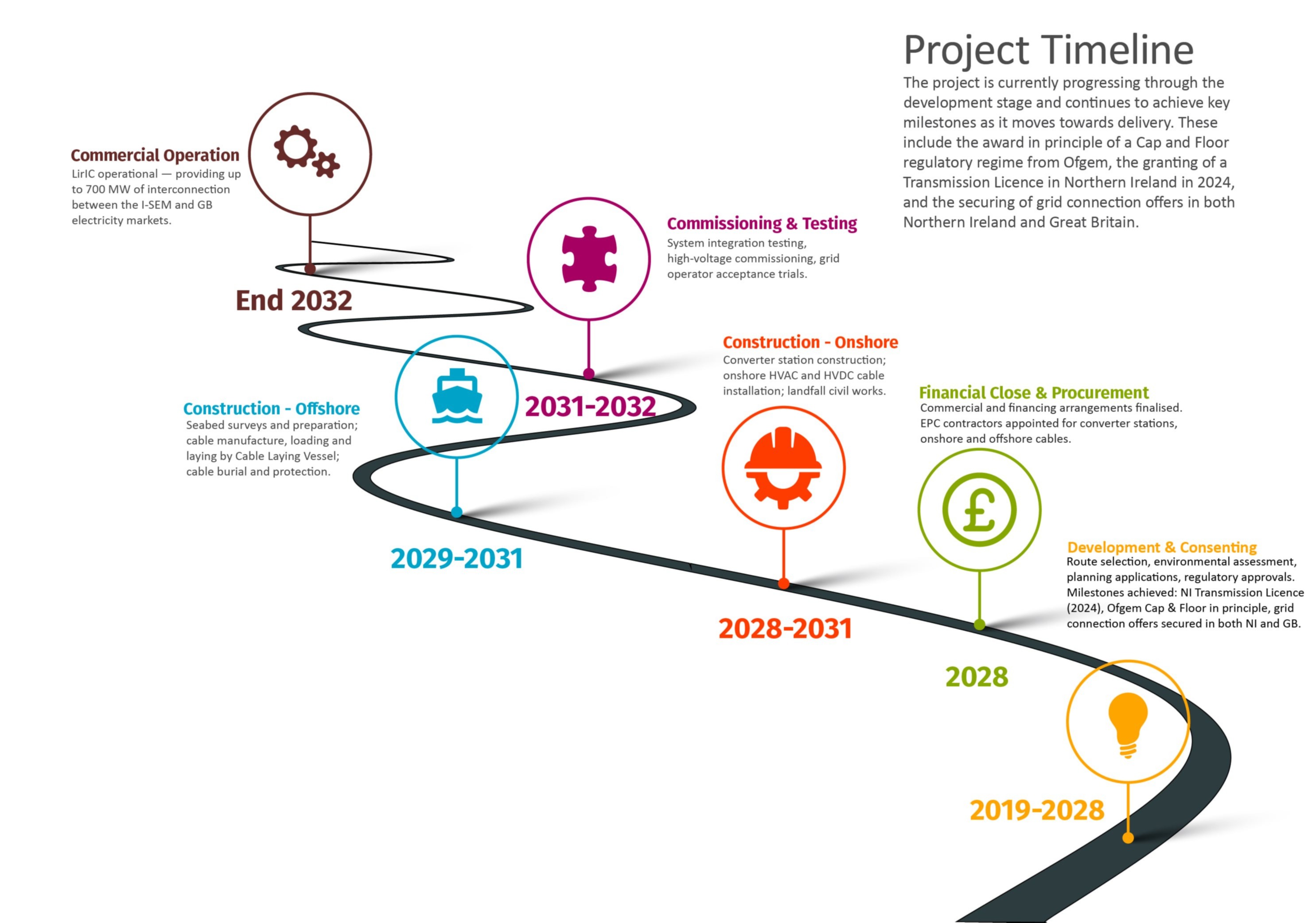
A multi-year programme spanning four jurisdictions involving specialist contractors on land and at sea.
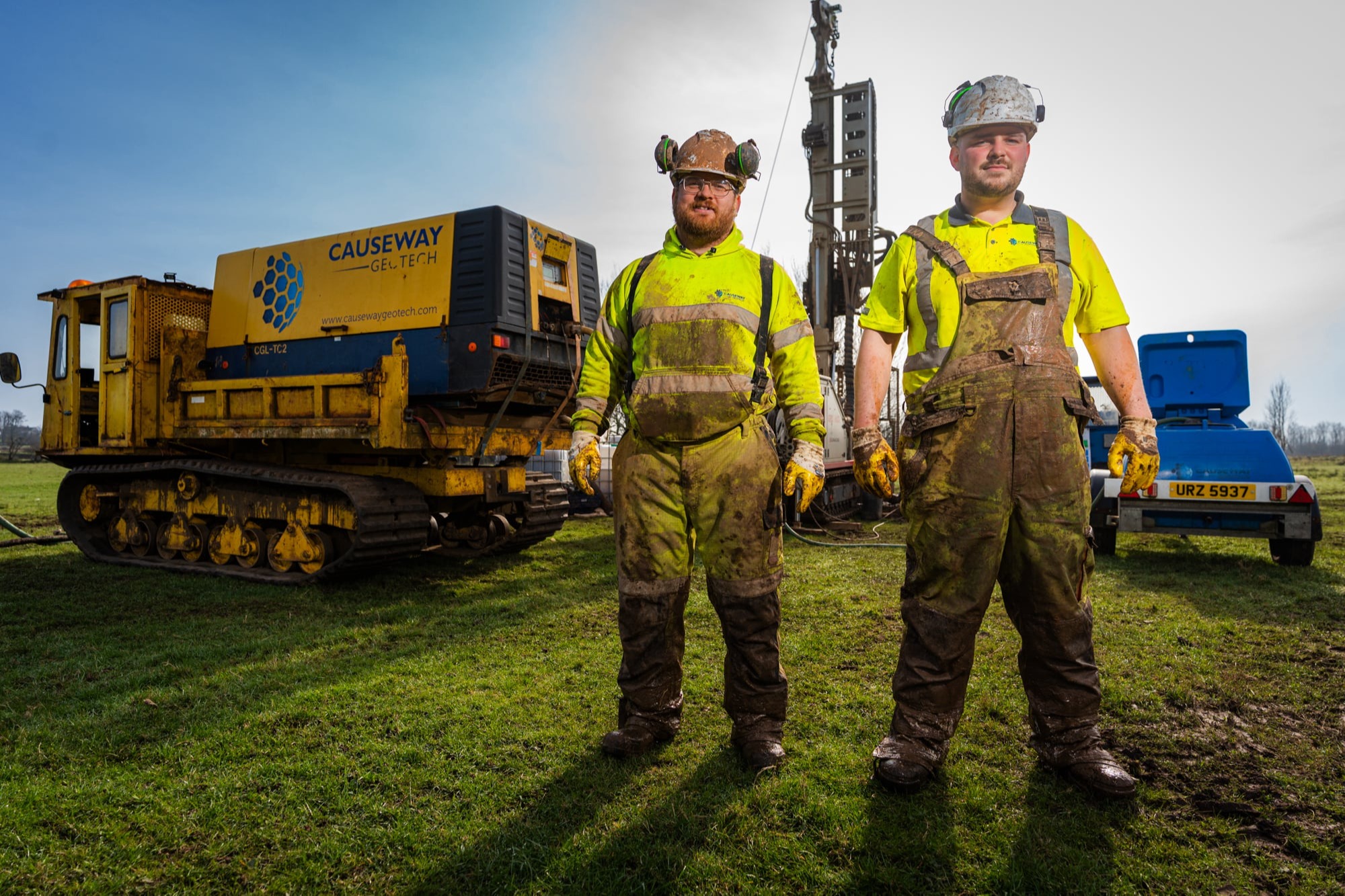
Converter station construction involves major civil engineering: site surveys and preparation, concrete foundations, large steel-frame buildings, and installation of complex electrical equipment. Onshore cable works progress section by section: trenching, duct installation, cable pulling and jointing, with all land reinstated to original condition on completion.
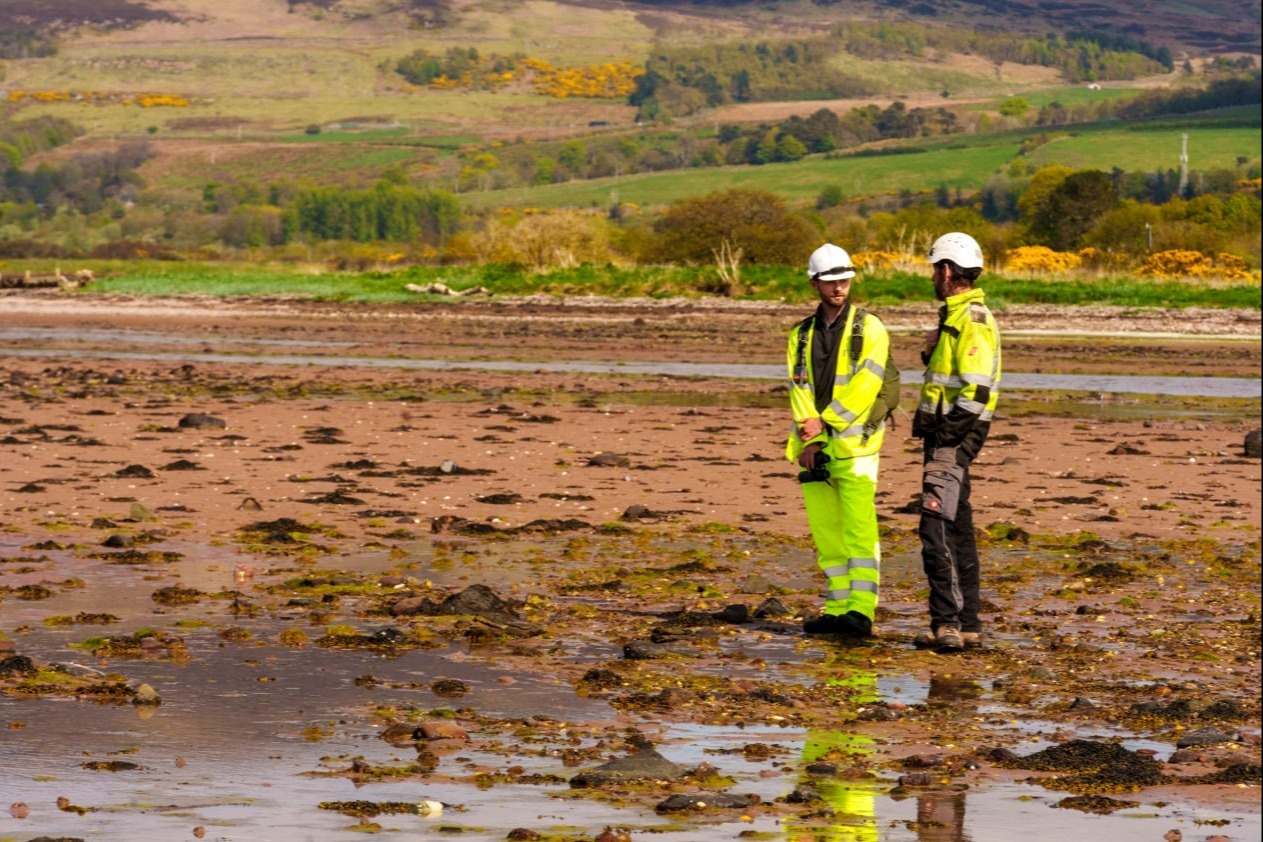
The offshore programme starts with detailed seabed surveys. The cables are then laid continuously from a Cable Laying Vessel as it moves along the route, potentially completing the full 140 km crossing with just a single joint per cable. Shore-landing operations at each end are among the most complex phases, requiring close coordination between the vessel, onshore winches and dive teams.

© Copyright 2025 TINV. All Rights Reserved
We use cookies to ensure that we give you the best experience on our website.